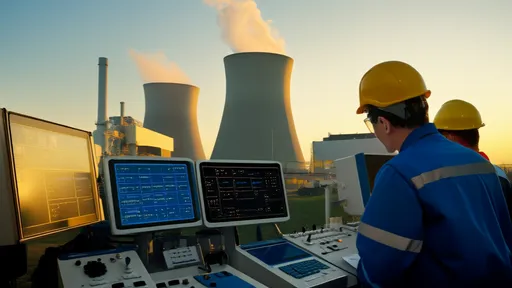
As the world grapples with the dual challenges of climate change and energy security, nuclear power is experiencing a remarkable resurgence. Long relegated to the sidelines of the global energy conversation due to high-profile accidents and public apprehension, the atom is being re-evaluated through a new, more pragmatic lens. This renewed interest is not merely a reaction to volatile fossil fuel markets but is fundamentally driven by its potential role in a decarbonized future. The conversation has shifted from whether we should use nuclear energy to how we can leverage it safely and economically to meet ambitious net-zero targets.
Central to this re-evaluation is the evolving Environmental, Social, and Governance (ESG) framework. For years, nuclear power presented a paradox within sustainable investing. Its carbon-free baseload power generation addressed the Environmental pillar impeccably, offering a stark contrast to the intermittency of renewables like solar and wind. However, it was historically penalized by many ESG rating agencies and green taxonomies due to the long-term challenges of radioactive waste management and the potential for catastrophic accidents. This created a significant financing hurdle, often excluding nuclear projects from the vast pools of capital earmarked for sustainable assets.
The landscape is now changing dramatically. A growing body of scientific consensus, including from the Intergovernmental Panel on Climate Change (IPCC), recognizes that achieving deep decarbonization without nuclear energy is significantly more difficult, if not impossible. This has prompted a critical rethinking within the financial and regulatory world. The European Union’s landmark decision to include nuclear energy in its sustainable finance taxonomy, albeit under strict conditions, sent a powerful signal to global markets. It effectively legitimized nuclear power as a sustainable investment, acknowledging that its environmental benefits outweigh the managed risks.
This regulatory shift is unlocking new and innovative financing opportunities. The traditional model of massive, capital-intensive projects funded by utility balance sheets or government treasuries is being supplemented by more agile approaches. Small Modular Reactors (SMRs), with their lower upfront costs, standardized designs, and enhanced safety features, are particularly attractive to private investors. Venture capital and private equity firms are beginning to pour billions into advanced nuclear startups developing SMR and Generation IV technologies. This influx of capital is not just about building reactors; it is fueling innovation across the entire fuel cycle, from advanced uranium enrichment to novel waste recycling technologies.
Furthermore, the blending of public and private capital is becoming a cornerstone of the nuclear renaissance. Governments are deploying mechanisms like loan guarantees, production tax credits, and power purchase agreements to de-risk projects and attract private investment. The U.S. Inflation Reduction Act, for instance, extends existing tax credits for nuclear power and provides support for existing plants, preventing the premature closure of the nation’s largest source of clean electricity. This public backing provides the stability and confidence that institutional investors, such as pension funds and insurance companies, require to commit capital to long-term infrastructure projects.
On the Social front, the industry is confronting its legacy issues with renewed vigor. Public acceptance remains the single greatest social challenge. The industry is addressing this through unprecedented transparency, community engagement, and by highlighting the high-paying, local jobs created during both construction and operation. The conversation now extends beyond mere energy production to include energy justice and grid reliability, positioning nuclear as a key player in ensuring a stable and affordable energy supply for all.
The Governance pillar is equally critical. The perception of regulatory opacity and close ties between industry and government has been a historical weakness. The new wave of nuclear development is being built on a foundation of robust, independent, and international oversight. Strengthening the International Atomic Energy Agency (IAEA) and ensuring stringent national regulatory frameworks are prerequisites for securing social license and, by extension, financing. Investors are increasingly scrutinizing the governance structures of nuclear enterprises, demanding clear strategies for safety, waste, and decommissioning before writing a check.
In conclusion, the nuclear renaissance is being forged at the intersection of climate necessity and financial innovation. The reinterpretation of nuclear power within the ESG framework is dismantling old barriers and catalyzing a wave of investment into next-generation technologies. While challenges around waste, cost, and public perception persist, the convergence of scientific consensus, supportive policy, and sophisticated financing models is creating a viable path forward. Nuclear energy is no longer a relic of the past but is increasingly viewed as an indispensable component of a secure, sustainable, and low-carbon energy future.
By /Aug 30, 2025

By /Aug 30, 2025

By /Aug 30, 2025

By /Aug 30, 2025

By /Aug 30, 2025
By /Aug 30, 2025
By /Aug 30, 2025
By /Aug 30, 2025

By /Aug 30, 2025

By /Aug 30, 2025
By /Aug 30, 2025

By /Aug 30, 2025

By /Aug 30, 2025

By /Aug 30, 2025

By /Aug 30, 2025
By /Aug 30, 2025

By /Aug 30, 2025

By /Aug 30, 2025

By /Aug 30, 2025

By /Aug 30, 2025
