Neuroplasticity Basis of Habit Formation

Jul 21, 2025 By

The human brain is a remarkably adaptable organ, capable of rewiring itself in response to repeated experiences and behaviors. This phenomenon, known as neuroplasticity, forms the biological foundation for habit formation. When we consistently engage in a particular activity or thought pattern, our neural pathways undergo physical changes to make that behavior more automatic and efficient. Understanding this process provides profound insights into how habits—both beneficial and detrimental—take root in our lives.

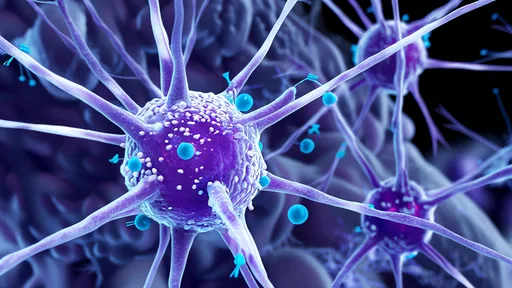
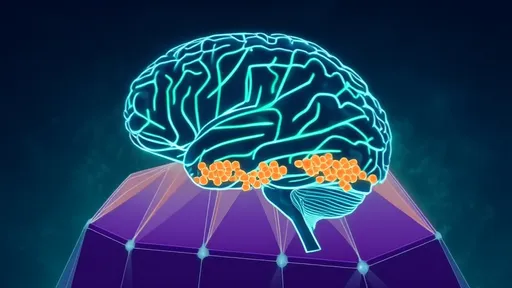
At the core of habit formation lies the strengthening of synaptic connections between neurons. Each time we repeat an action, the associated neural circuit becomes more robust through a process called long-term potentiation. This electrochemical reinforcement makes the pathway more sensitive and likely to fire in the future. What begins as a conscious effort gradually transitions into automatic processing as the brain creates neural shortcuts. The basal ganglia, a deep brain structure, plays a particularly crucial role in this transition from deliberate action to habitual behavior.

Neurotransmitters act as chemical messengers in this process, with dopamine serving as a key player in habit reinforcement. When a behavior produces a rewarding outcome, dopamine release strengthens the connection between the cue and the response. This creates a feedback loop that makes us more likely to repeat the behavior under similar circumstances. Over time, the anticipation of reward alone can trigger the habitual response, explaining why habits often persist even when the original reward is no longer present.

The brain's remarkable efficiency comes at a cost—it tends to prioritize well-worn neural pathways over creating new ones. This explains why breaking established habits feels so challenging. The existing circuitry has become the path of least resistance, requiring conscious effort to override. However, the same neuroplasticity that created the habit can be harnessed to change it. By consistently practicing new behaviors, we can gradually weaken old pathways while strengthening new ones.

Sleep emerges as a crucial factor in habit formation that many overlook. During sleep, particularly during REM cycles, the brain consolidates and reinforces the neural patterns formed during waking hours. This means that quality sleep enhances our ability to develop new habits while making existing ones more entrenched. Chronic sleep deprivation, conversely, can disrupt this process and make behavioral changes more difficult to sustain.

Environmental cues exert powerful influence on our habitual behaviors through conditioned neural responses. The brain associates specific contexts—whether physical locations, times of day, or emotional states—with particular routines. These associations become so strong that encountering the cue automatically activates the habitual response, often without conscious awareness. This explains why changing environments can be an effective strategy for breaking unwanted habits and establishing new ones.

Contrary to popular belief, habit formation isn't simply a matter of repeating an action for 21 days. The timeline varies significantly depending on the complexity of the behavior, individual differences in neurochemistry, and the consistency of practice. Some simple habits may form relatively quickly, while complex behaviors might require months of repetition before becoming automatic. The key lies in the quality and context of repetition rather than adhering to an arbitrary timeline.

Stress and emotional states significantly impact the habit formation process. During periods of stress, the brain tends to default to established patterns rather than expending energy on new behaviors. This explains why people often revert to old habits during challenging times, even after making progress with new routines. Understanding this tendency can help individuals develop strategies to maintain behavioral changes during stressful periods.

The interplay between conscious decision-making and automatic processing reveals an important insight about habit change. While willpower plays a role in establishing new patterns, relying solely on conscious control is ultimately unsustainable. The true power lies in shaping our environments and routines to make desired behaviors easier to perform automatically. This approach aligns with how our brains naturally function, working with our neurobiology rather than against it.

Recent advances in neuroimaging have allowed scientists to observe habit formation in real time. Functional MRI studies show how activity shifts from the prefrontal cortex (associated with conscious decision-making) to the basal ganglia (associated with automatic behaviors) as a habit becomes established. These findings confirm that habit formation isn't about eliminating thought, but rather about transferring the processing to different brain regions.

The implications of habit-related neuroplasticity extend far beyond personal development. Understanding these mechanisms can inform more effective educational strategies, addiction treatment programs, and rehabilitation approaches. By working with the brain's natural learning processes, interventions can be designed to create lasting behavioral change. This knowledge also helps explain why some therapeutic approaches succeed where others fail, based on how they engage the brain's plasticity mechanisms.

Age-related differences in neuroplasticity suggest that habit formation strategies might need to vary across the lifespan. While younger brains generally demonstrate greater plasticity, older brains retain significant capacity for change. The key difference lies in the pace and approach—older individuals may require more repetition and stronger contextual cues to establish new patterns, but the fundamental mechanisms remain intact throughout life.

Practical applications of this knowledge abound. By understanding that habits form through cue-routine-reward loops, individuals can deliberately design new patterns. Keeping the cue and reward constant while gradually modifying the routine proves more effective than attempting radical changes. This approach respects the brain's existing wiring while gently steering it toward healthier patterns.

The relationship between habit formation and identity reveals a deeper layer of neuroplasticity. As behaviors become habitual, they begin to shape our self-perception at a neural level. Repeated actions literally rewire the brain to incorporate them into our self-concept. This explains why lasting change often requires adopting new identities rather than just implementing new behaviors—the brain ultimately aligns its wiring with how we consistently see ourselves.

Emerging research suggests that certain pharmacological agents might enhance neuroplasticity and potentially accelerate habit formation. However, the ethical implications and long-term effects of such interventions remain unclear. More promising are non-invasive techniques like neurofeedback and targeted cognitive exercises that may help optimize the brain's natural plasticity for habit change without artificial enhancement.

Ultimately, the neuroscience of habit formation offers both explanation and empowerment. While our brains are wired to create efficient routines, we retain the ability to consciously shape which routines become automatic. This understanding removes moral judgment from habit formation, framing it instead as a neurological process that can be understood and guided. With patience and strategic practice, we can harness our brain's plasticity to cultivate habits that serve our wellbeing and goals.
Recommend Posts
Health

Biological Markers of Social Isolation

By /Jul 21, 2025

Social isolation has long been recognized as a significant public health concern, linked to increased risks of mental and physical ailments. However, recent advances in biomedical research have begun to uncover the biological mechanisms that underlie this phenomenon. Scientists are now identifying specific biomarkers that correlate with prolonged social isolation, offering new insights into how loneliness and lack of social connection manifest at a cellular and molecular level.
Health

Nudging Strategies for Health Behavior Change

By /Jul 21, 2025

In recent years, the concept of nudging has gained significant traction in the field of public health. Unlike traditional approaches that rely on mandates or education alone, nudging leverages subtle changes in the environment to encourage healthier choices without restricting freedom. This approach is rooted in behavioral science, recognizing that human decisions are often influenced by context, convenience, and subconscious cues rather than purely rational deliberation.
Health

Muscle Fatigue Relief Techniques for Surgeons

By /Jul 21, 2025

The physical demands placed on surgeons during lengthy procedures are often underestimated. While much attention is given to patient outcomes and surgical techniques, the toll exacted on the surgeon's body remains a rarely discussed aspect of modern medicine. Muscular fatigue in surgeons isn't merely about discomfort—it can directly impact surgical precision, decision-making, and ultimately patient safety. The development of effective fatigue-reduction techniques has become an emerging focus in surgical ergonomics, blending insights from sports medicine, biomechanics, and occupational health.
Health

Biodegradation Time Regulation of Orthopedic Implants

By /Jul 21, 2025

The field of orthopedic implants has witnessed a paradigm shift with the advent of biodegradable materials. Unlike traditional metal implants, which remain in the body indefinitely, biodegradable implants are designed to degrade over time, eliminating the need for secondary removal surgeries. However, the precise control of degradation rates remains a critical challenge. Researchers are now focusing on tailoring the degradation timeline to match the natural healing process of bone tissue, ensuring optimal mechanical support and biocompatibility.
Health

Esports Athletes' Visual Fatigue Recovery Plan

By /Jul 21, 2025

The world of competitive gaming demands peak performance from its athletes, both mentally and physically. Among the many challenges professional esports players face, visual fatigue stands out as a silent performance killer. Hours of intense screen exposure, rapid eye movements, and the need for sustained focus create a perfect storm for eye strain that can deteriorate reaction times and decision-making abilities.
Health

Clinical Practice of Motivational Interviewing

By /Jul 21, 2025

The clinical application of motivational interviewing has transformed therapeutic interactions across diverse healthcare settings. This collaborative, person-centered approach empowers individuals to find their own reasons for change while respecting their autonomy. Unlike directive counseling styles, motivational interviewing dances in the rhythm of the client's ambivalence, helping them resolve uncertainty without confrontation or coercion.
Health

Durability Assessment of Antimicrobial Textiles

By /Jul 21, 2025

The textile industry has witnessed significant advancements in antimicrobial treatments, driven by growing consumer demand for hygienic and long-lasting fabric solutions. As bacteria and fungi continue to pose health risks in everyday environments, the development of durable antimicrobial textiles has become a focal point for researchers and manufacturers alike. Evaluating the persistence of these treatments requires a nuanced understanding of material science, application techniques, and real-world performance under varying conditions.
Health

Environmental Cues for Dietary Behavior Intervention

By /Jul 21, 2025

The subtle yet powerful influence of environmental cues on eating behaviors has become an increasingly studied phenomenon in nutritional psychology. While most people believe their food choices result from conscious decision-making, mounting evidence suggests our surroundings shape consumption patterns in ways we rarely acknowledge. From lighting and music to plate size and social settings, these hidden drivers of dietary habits operate beneath our awareness, steering us toward healthier or unhealthier choices without explicit coercion.
Health

Customized Hearing Protection Plan for Musicians

By /Jul 21, 2025

In the world of music, where sound is both the medium and the message, protecting one's hearing is often overlooked. Musicians, whether they are classical violinists or rock drummers, face unique challenges when it comes to preserving their auditory health. The constant exposure to high decibel levels, prolonged rehearsals, and the need for precise sound discrimination create a perfect storm for potential hearing damage. Yet, many artists remain unaware of the risks or dismiss them as an inevitable part of the profession. This article explores the importance of customized hearing protection for musicians and how tailored solutions can safeguard their most valuable asset—their ears.
Health

Cognitive Resource Management of Decision Fatigue

By /Jul 21, 2025

The modern world bombards us with decisions. From the moment we wake up to the time we collapse into bed, we're constantly making choices—what to wear, what to eat, how to prioritize tasks, when to respond to messages. This endless stream of decisions doesn't just drain our time; it depletes something far more precious: our cognitive resources. Decision fatigue, the deteriorating quality of decisions after a long session of choice-making, isn't just about willpower. It's about how we manage—or fail to manage—our mental bandwidth.
Health

Vitamin D Supplementation Strategies for Polar Expeditions

By /Jul 21, 2025

The harsh environment of polar regions presents unique challenges for human health, particularly when it comes to maintaining adequate vitamin D levels. With months of darkness during polar winters and limited exposure to sunlight, researchers and expedition members face significant risks of vitamin D deficiency. This has led to the development of specialized supplementation strategies tailored to the extreme conditions of Arctic and Antarctic research stations.
Health

Stages of Digital Addiction Withdrawal

By /Jul 21, 2025

The modern world is deeply intertwined with digital devices, and for many, what starts as a casual habit can spiral into a full-blown addiction. The compulsive need to check notifications, scroll endlessly, or immerse oneself in virtual worlds has become a pervasive issue. Recognizing the stages of digital detoxification is crucial for those seeking to reclaim their time, focus, and mental well-being. Breaking free from digital dependency isn’t about abandoning technology altogether but rather establishing a healthier relationship with it.
Health

Long-Distance Driver Micro-Exercise Prevention Package

By /Jul 21, 2025

The life of a long-haul truck driver is one of endurance, both mentally and physically. Hours spent behind the wheel in a fixed position take a silent toll on the body that many don't consider until the damage becomes apparent. A new wave of health awareness has brought attention to what experts call "micro-movements" - small but crucial physical adjustments that can make all the difference in preventing chronic pain and musculoskeletal disorders among professional drivers.
Health

Night Shift Nurses' Breast Cancer Prevention Guidelines

By /Jul 21, 2025

The growing body of research linking night shift work to increased breast cancer risk has prompted healthcare organizations to develop specialized prevention guidelines for nurses working overnight. Emerging evidence suggests circadian rhythm disruption may play a significant role in oncogenesis, particularly for hormone-sensitive cancers. Female night shift nurses face unique challenges that require tailored approaches to risk reduction, combining workplace adaptations with personal health strategies.
Health

The Impact of Mindfulness Practice on Telomere Length

By /Jul 21, 2025

The relationship between mindfulness practices and telomere length has emerged as a fascinating area of scientific inquiry in recent years. As researchers delve deeper into the mechanisms of cellular aging, they're uncovering surprising connections between mental states and physical biomarkers. Telomeres, the protective caps at the ends of chromosomes, serve as biological clocks that shorten with each cell division, making them reliable indicators of cellular aging. The discovery that psychological factors might influence this fundamental aging process has opened new possibilities for health interventions.
Health

Neuroplasticity Basis of Habit Formation

By /Jul 21, 2025

The human brain is a remarkably adaptable organ, capable of rewiring itself in response to repeated experiences and behaviors. This phenomenon, known as neuroplasticity, forms the biological foundation for habit formation. When we consistently engage in a particular activity or thought pattern, our neural pathways undergo physical changes to make that behavior more automatic and efficient. Understanding this process provides profound insights into how habits—both beneficial and detrimental—take root in our lives.
Health

Neuro-Reward Mechanism of Delayed Gratification

By /Jul 21, 2025

The human brain is wired to seek immediate rewards, yet our ability to delay gratification plays a pivotal role in long-term success. At the core of this behavioral paradox lies a complex neural reward system that governs our choices between short-term pleasure and future benefits. Understanding how the brain processes delayed rewards reveals why some individuals excel at self-control while others struggle.
Health

Psychological Training Methods for Pain Tolerance

By /Jul 21, 2025

The human capacity to endure pain is not solely determined by physiological factors but is profoundly influenced by psychological conditioning. While most people view pain as an unavoidable physical sensation, emerging research reveals that mental training techniques can significantly alter one's perception of discomfort. This discovery has far-reaching implications, from athletic performance to chronic pain management, challenging conventional approaches to pain tolerance.
Health

Biological Membrane Inhibition Technology for Dental Materials

By /Jul 21, 2025

The field of dentistry has long grappled with the challenge of biofilm formation on dental materials, a persistent issue that contributes to oral diseases and implant failures. Biofilms, which are complex communities of microorganisms encased in a protective extracellular matrix, pose significant risks to both natural and artificial dental structures. Recent advancements in biofilm inhibition technologies are revolutionizing how dental professionals approach prevention and treatment, offering promising solutions to enhance patient outcomes.
Health

Iterative Improvement of Firefighter Heat Stress Protection Equipment

By /Jul 21, 2025

The evolution of thermal stress protection gear for firefighters has been a critical yet often overlooked aspect of modern firefighting. Over the decades, advancements in materials science, ergonomic design, and physiological understanding have transformed bulky, heat-retentive uniforms into sophisticated life-saving systems. These innovations haven't just improved comfort—they've redefined survivability in extreme environments where seconds determine outcomes.